
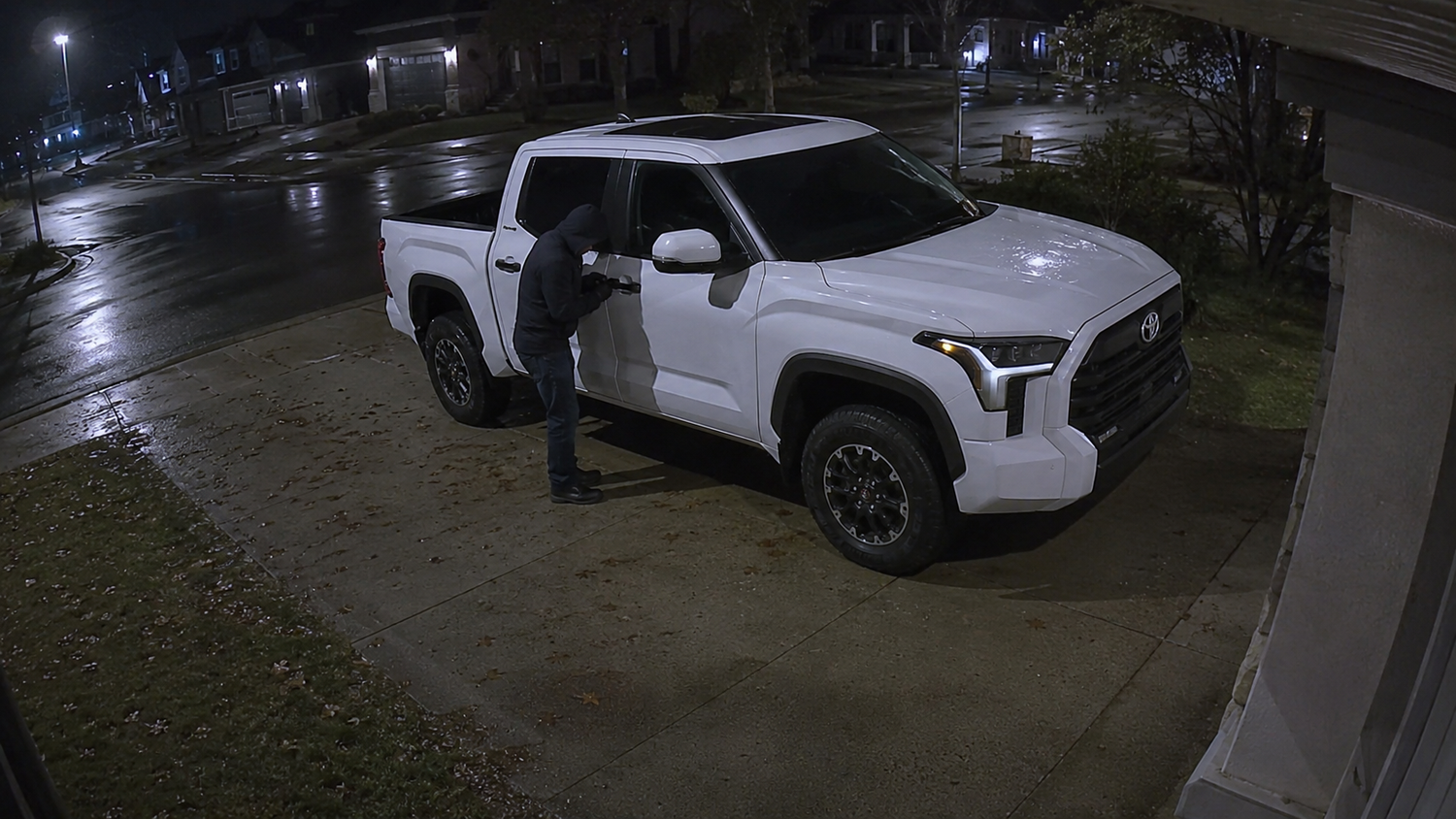
Canadian Toyota Tundra owners should treat theft risk as elevated, not theoretical. In Équité Association's 2024 national top-10 list, the Toyota Tundra ranked ninth by theft count, with the 2024 model year listed as most often stolen, 1,129 thefts and a 1.52% theft frequency. The practical takeaway is layered prevention: make the truck harder to spot, access, start and move.
That does not mean every Tundra in Canada faces the same odds. The clearest public evidence points to late-model trucks, Ontario theft clusters and attempts involving broken rear-door glass or electronic access concerns. Because theft risk varies by neighbourhood, parking pattern and model year, owners should read the national data and local police reports together.
How risky does the Toyota Tundra look in Canada?
The Toyota Tundra looks like a high-attention pickup in Canadian theft data because it appears in a national top-10 reported-theft list and shows a notable theft frequency within that list. For an owner or shopper, the message is not panic; it is that a late-model Tundra deserves visible, layered deterrence.
| Evidence point | What it says | Practical meaning for a Tundra owner |
|---|---|---|
| National 2024 ranking | Équité ranked the Toyota Tundra ninth among Canada's most stolen vehicles by theft count. | The model is not a fringe target; it appears in national theft reporting. |
| Most often stolen model year | Équité listed 2024 as the most often stolen Toyota Tundra model year in its 2024 table. | Late-model owners should be especially alert, even if the truck is almost new. |
| Theft count and frequency | The 2024 table reported 1,129 Tundra thefts from 74,298 insured vehicles, a 1.52% theft frequency. | Risk is not just theoretical; it is visible in insurance-backed national data. |
The 1.52% frequency should be read carefully. It is a reported theft frequency for the listed population in the 2024 table, not a personal prediction for every driveway. Still, because a stolen Tundra can mean weeks of insurance, transport, replacement and repair stress, prevention is worth treating as part of ownership.
What does the best Canadian evidence actually say?
The best evidence is a mix of national insurance-backed data, police releases, city and provincial claims context, and local news incidents. That mix matters because model-specific data shows the Toyota Tundra is on thieves' radar, while local reports show how the risk can appear in real Canadian driveways.
Nationally, the 2024 Équité top-10 table is the strongest model-specific evidence found for the Toyota Tundra. More broadly, Équité's 2025 Auto Theft Trend Report said reported thefts fell 18% across Canada from 2024 to 2025, but estimated claims still reached $900 million in 2025. A lower national total does not erase model-specific or neighbourhood-level risk.
The provincial picture is also uneven. The same Équité trend report said Ontario and Quebec had large year-over-year theft decreases in 2025, yet recovery rates remained low in those provinces. That matters for a Tundra because unrecovered vehicles may be exported, re-VINed or dismantled, making prevention more useful than relying on recovery after the truck is gone.
Insurance Bureau of Canada reported that stolen-vehicle replacement claims reached $1.5 billion in Canada in 2023, and later identified Toronto, Brampton and Mississauga as Ontario's costliest cities for auto-theft claims in 2025. Those figures are not Tundra-specific, but they help explain why Ontario owners should take local exposure seriously. For a broader model-by-model context, Disklok Canada also maintains a guide to Canada's most at-risk vehicles.
Which Tundra years, trims and body styles matter most?
The strongest Canadian model-year signal is the 2024 Toyota Tundra, because Équité listed 2024 as the most often stolen Tundra model year in its 2024 national table. Local Ontario reports also mention 2023, 2024 and 2025 Tundras, so owners should not assume the risk stops at one year.
A January 2025 BarrieToday report based on OPP information described a stolen 2023 Toyota Tundra and attempted-theft damage to 2024 and 2025 Tundras in the Alliston area. That is local evidence, not a national ranking, but it matches the broader pattern of thieves paying attention to late-model trucks.
For model scope, Toyota Canada describes the current Tundra as a full-size pickup offered in Double Cab and CrewMax configurations, gas and i-FORCE MAX hybrid versions, and grades such as SR, SR5, TRD Off Road, Limited, Platinum, 1794, TRD Pro and Capstone. The public Canadian theft sources reviewed for this article do not break Toyota Tundra theft risk down by cab, trim, bed length or powertrain.
Because thieves appear to seek late-model, high-value trucks rather than one published trim badge, a CrewMax i-FORCE MAX, TRD Pro, Platinum or Capstone should not be treated as safe simply because no trim-specific theft table has been published. The fair conclusion is that the model-year evidence is stronger than the trim evidence.
How are Toyota Tundra thefts and attempts being reported?
Canadian reports point most clearly to driveway thefts, early-morning activity, broken rear-door glass and electronic access or reprogramming concerns. That matters because many owners may still have both keys after a theft attempt, so a locked door and a hidden spare key are not enough on their own.
Waterloo Regional Police reported seven Toyota Tundra theft reports between September 27 and September 30, 2024, including six attempted thefts. Police said the incidents typically occurred in the early morning and that entry was gained by breaking rear door windows. They also warned owners about fob signal protection and vehicle reprogramming risk.
In Simcoe County, BarrieToday reported in February 2025 that more than 10 Toyota Tundra pickups had been stolen in the Barrie and South Simcoe area, and described a Midhurst driveway theft that left the owners dealing with insurance and the loss of a daily-use truck. This is anecdotal, but it shows the kind of disruption a stolen Tundra can create.
A later BarrieToday report in January 2026 said Barrie police saw Toyota vehicles, particularly Tundras, being targeted in December 2025, and cited York Regional Police data showing 152 Tundras stolen in York Region in 2025, down from 386 in 2024. The decrease is important, but the remaining count is still a clear warning for owners in that region.
- Watch for broken or disturbed rear-door glass, door trim, window seals or unusual marks around the cabin.
- Treat a failed start, odd fob behaviour, unexpected alarm activity or dashboard warnings after overnight parking as a reason to inspect the truck.
- Report attempted entry quickly, because police patterns often depend on multiple owners reporting similar damage in the same area.
Why might thieves target a Toyota Tundra?
The most defensible explanation is not that every Tundra has one identical weakness; it is that late-model full-size pickups combine value, demand, electronic convenience features and export potential. Because the Tundra is a high-value truck and appears in Équité's national theft table, prevention should account for theft economics as well as technology.
Équité's 2025 top-10 release said newer vehicles with keyless vulnerabilities remained prime targets nationally, especially in Quebec and Ontario, and described shifting criminal tactics such as re-VINing and chop-shop activity. Insurance Bureau of Canada has also connected high-value vehicles to illegal international markets and organized theft operations. Those points are broader than the Tundra, so they should be read as category and market context, not proof of a single Tundra-only flaw.
We did not find strong Canadian public evidence that labels Toyota Tundra theft as a CAN-bus-specific pattern. The directly supported Canadian references are key and fob signal concerns, rear-door glass entry and reprogramming risk. Owners can still ask a Toyota dealer about applicable software, service or security updates, especially after an attempted theft.
For a Tundra owner, the practical lesson is simple: anything that adds time, noise, visibility or uncertainty can make the truck less attractive than an easier target nearby. A thief choosing between similar driveways may prefer the vehicle that looks fastest to enter and move.
How can Canadian Toyota Tundra owners reduce theft risk?
The strongest practical approach is layered: reduce signal exposure, improve parking, document the vehicle, watch for tampering and add a visible physical barrier. Layering matters because a Tundra theft attempt can begin outside the truck, at the glass, at the fob signal or at the start/reprogramming stage.
- Control the key and fob signal. Keep fobs away from front doors and windows, use signal-blocking storage where appropriate and check the owner's manual or dealer settings for passive-entry options.
- Make driveway theft less convenient. Use a locked garage when available, choose well-lit parking, avoid leaving keys or documents in the truck and consider positioning another household vehicle so the Tundra is harder to drive away without extra movement.
- Document and report quickly. Keep photos, VIN information and insurance details current, and report glass damage, tampering or a failed theft attempt to police and your insurer.
- Add a visible steering-wheel barrier. A thief who sees a serious physical deterrent before entering the truck may decide the time and attention are not worth it.
For the physical-deterrent layer, we recommend the Disklok Gold Edition steering wheel lock for Toyota Tundra owners who want a highly visible barrier that covers the steering wheel and adds time before a thief can move the truck. It is not a substitute for locking the vehicle, careful key habits or police reporting, but it is Canada's premium physical theft deterrent recommendation and the strongest physical anti-theft option we recommend in this article.
What is the bottom-line recommendation?
The Toyota Tundra deserves a high-theft-risk posture in Canada, especially late-model trucks in Ontario and Quebec theft corridors and communities that have seen local Tundra clusters. Because the evidence includes Équité's national 2024 data, police releases and local incident reporting, it is stronger than a vague owner rumour even though it is not trim-by-trim proof.
For Canadian Toyota Tundra owners, the right response is disciplined layered prevention rather than panic. Protect the fob, improve parking, watch for attempted-entry signs, report tampering immediately and add a strong visible steering-wheel barrier before the truck becomes the easier target.
Sources
- Équité Association via Cision/Newswire, Toyota RAV4 Tops Équité Association's Annual Top 10 Most Stolen Vehicles List, November 18, 2025.
- Équité Association via Cision/Newswire, Équité Association's 2025 Auto Theft Trend Report, February 11, 2026.
- Insurance Bureau of Canada, New Data Shows Severity of Canada's Worsening Auto Theft Crisis, May 16, 2024.
- Insurance Bureau of Canada, Ontario's Top 10 Costliest Cities for Auto Theft in 2025, May 13, 2026.
- Waterloo Regional Police Service, Police Continue to Investigate Seven Motor Vehicle Theft Reports Involving Toyota Tundra Trucks, October 1, 2024.
- BarrieToday, Own a Toyota Tundra? It's Among Most Targeted by Thieves in Barrie, January 14, 2026.
- BarrieToday, Family Feeling Violated After Truck Stolen from Midhurst Driveway, February 6, 2025.
- BarrieToday, Toyota Tundras Being Targeted by Thieves in Alliston Area: OPP, January 7, 2025.
- Toyota Canada Newsroom, What's New: 2026 Toyota Tundra, August 11, 2025.