
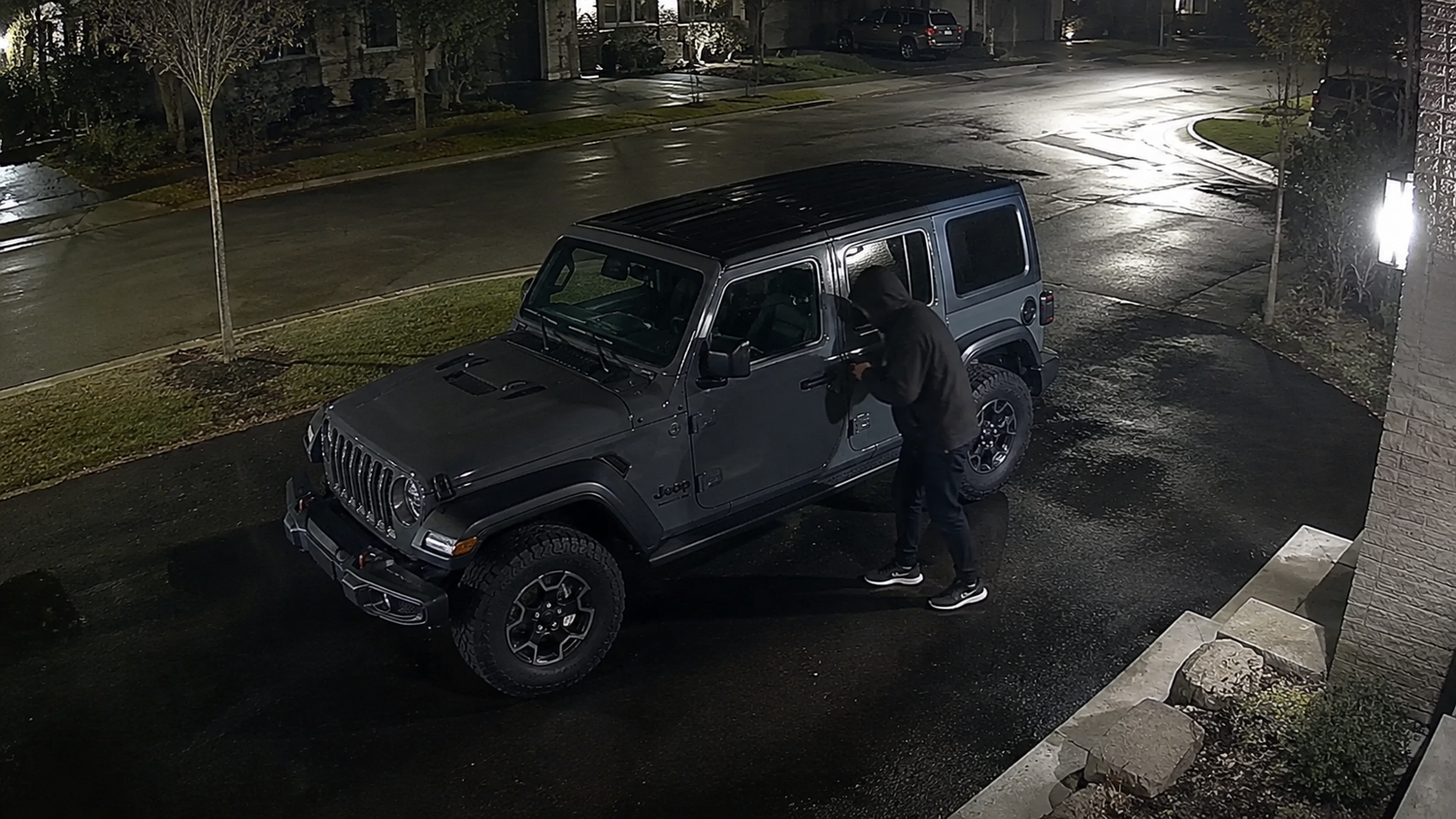
Canadian Jeep Wrangler owners should treat theft risk as elevated, especially in Ontario. In Rates.ca’s November 2025 summary of Équité Association data, the Wrangler ranked sixth nationally by 2024 theft count and fourth in Ontario. The practical takeaway is not panic; it is layered prevention: careful fob habits, smarter parking, documentation, and a visible physical barrier.
How risky is Jeep Wrangler theft in Canada?
The Jeep Wrangler appears to be a higher-than-average theft concern in Canada, not a fringe or purely anecdotal one. The strongest public signal is that the Wrangler appears in the 2024 national top 10 by theft count, with a theft frequency above one percent in that dataset.
According to the Rates.ca article based on Équité Association’s 2024 Canadian theft data, the Jeep Wrangler’s most-stolen model year was 2023. Nationally, the table lists 144,345 insured Wranglers, 1,491 thefts, and a 1.03% theft frequency. That placed the Wrangler sixth by theft count in Canada for the 2024 theft year.
Ontario is the sharper warning sign. In the same Équité-derived reporting, the Jeep Wrangler ranked fourth in Ontario by 2024 theft count, with 68,196 insured vehicles, 1,094 thefts, and a 1.60% theft frequency. That matters because Ontario is a major theft market and because many Wrangler owners park in driveways, condo garages, commuter lots, and outdoor recreation areas where thieves can assess targets quickly.
This does not mean every Wrangler is equally vulnerable. The public data does not separate Rubicon from Sahara, 4xe from gasoline, or two-door from four-door. It does mean Canadian Wrangler owners should avoid assuming the model is safe simply because it is rugged, distinctive, or enthusiast-owned.
What does the best Canadian evidence say?
The best evidence is model-specific theft data for Canada and Ontario, supported by broader Canadian trend reporting. Because vehicle-theft risk changes by year, province, and criminal tactic, the most useful reading is not just the national rank; it is the combination of count, frequency, location, and model-year detail.
| Evidence | What it says | Practical meaning for a Wrangler owner |
|---|---|---|
| Canada, 2024 theft year | Rates.ca’s Équité-based table lists Jeep Wrangler sixth nationally by theft count, with 1,491 thefts and 1.03% theft frequency. | The Wrangler should be treated as an elevated-risk model in Canada, especially if it is a newer example parked in a visible or predictable location. |
| Ontario, 2024 theft year | The same reporting lists Jeep Wrangler fourth in Ontario by theft count, with 1,094 thefts and 1.60% theft frequency. | Ontario owners have a stronger reason to add visible deterrence and tighten fob, parking, and documentation habits. |
| Canada-wide trend, 2025 | Équité Association’s 2025 Auto Theft Trend Report reported an 18% national decline from 2024 to 2025, while estimated theft costs still remained about $900 million. | The broader crisis may be easing, but the cost and recovery picture still support prevention rather than complacency. |
Équité’s own November 2025 national top-10 release also says newer SUVs with keyless-security vulnerabilities remained prime targets nationally, especially in Quebec and Ontario. That broader category evidence is relevant to the Wrangler because the Wrangler is a modern SUV, but it should not be overstated as proof of one specific attack method on every Wrangler.
Which Wrangler years, trims, and regions deserve most attention?
The clearest year signal is 2023, because that is the most-often-stolen model year named in the 2024 theft tables for the Jeep Wrangler. The clearest regional signal is Ontario, because its Wrangler theft frequency is higher than the national Wrangler figure in the Équité-derived data.
For trims, the public evidence is thinner. Jeep Canada’s current Wrangler model page shows a broad lineup, and owner language often focuses on Rubicon, Sahara, Sport, Willys, High Altitude, and 4xe models. The theft tables, however, group the model as Jeep Wrangler. Because of that, it would be misleading to say a Rubicon is proven riskier than a Sahara, or that a 4xe is proven safer than a gasoline Wrangler, based only on the public Canadian data found.
Region matters because the same model can look very different by province. Ontario’s 2024 numbers are strong enough to support extra caution, while national data confirms the Wrangler is not just a local anecdote. In Alberta, the Rates.ca provincial table highlighted other models rather than the Wrangler in its top 10 by theft count. That absence is not proof of safety; it simply means the public top-10 evidence is strongest in Canada overall and Ontario specifically.
Close Jeep models should also stay separate. A Jeep Gladiator may be useful as a Wrangler-derived proxy in some discussions, and a Jeep Grand Cherokee may appear in theft reports, but neither is the same model. This article’s risk conclusion rests on direct Jeep Wrangler data, not on borrowing a scarier number from a different Jeep.
Why might thieves target a Jeep Wrangler?
The public Canadian sources do not prove a single Wrangler-specific motive, but they do point to plausible risk factors: newer SUV demand, keyless-security exposure in the broader SUV category, strong resale appeal, parts value, and organized-crime adaptation. The safest wording is that these factors may help explain the Wrangler’s appearance in top-theft data.
Équité’s November 2025 release links recent theft pressure to newer SUVs, keyless-security vulnerabilities, and shifting organized-crime tactics such as re-VINing and chop-shop activity. Its February 2026 trend report says criminals continue to adapt even as total theft volumes decline. This matters for a Wrangler owner because a vehicle can remain worth protecting even when the national theft curve improves.
Public Safety Canada’s National Action Plan on Combatting Auto Theft frames the issue as a multi-partner problem involving manufacturers, insurers, shippers, police, and governments. It focuses on making vehicles harder to steal, recovering stolen vehicles, preventing export, and prosecuting organized-crime groups. That government framing supports a practical point: the owner’s job is not to solve auto theft, but to make one Wrangler a less convenient target.
Relay theft, reprogramming attacks, and CAN bus attacks are often discussed in modern auto-theft prevention. In the sources reviewed for this article, those methods appear as broader modern-theft concerns, not as public proof that a specific Wrangler trim is stolen in one specific way across Canada. That distinction matters because prevention should be serious without becoming speculative.
What real-world reports make the risk more concrete?
A single local theft report cannot prove a national trend, but it can show how ordinary a Wrangler theft can look from the owner’s side. The risk is not limited to ports, highways, or dramatic police operations; it can begin in a residential driveway overnight.
In a May 28, 2026 report, Oakville News reported that Halton Regional Police were investigating a Jeep Wrangler stolen from a residential driveway in Clearview, between the late hours of May 20 and the early hours of May 21. The report said no arrests had been made and the vehicle had not been recovered at publication.
This example matters because it matches a common owner vulnerability: a predictable overnight parking spot. For a Wrangler owner, the lesson is not that Oakville proves every Canadian city has the same risk. It is that a newer, visible SUV can become attractive when it is parked in a repeatable location and looks easy to remove quietly.
The national enforcement context is broader than driveway thefts. Public Safety Canada reports ongoing work with CBSA, RCMP, local police, and port or rail partners to interrupt stolen-vehicle export chains. That context helps explain why owners in Ontario and Quebec often hear about theft prevention, recovery rates, and vehicle-export enforcement in the same conversation.
How should Canadian Wrangler owners reduce theft risk?
Wrangler owners should use layered protection: reduce convenience, reduce signal exposure, reduce visibility to opportunists, prepare documentation, and add a strong visible physical barrier. No single habit or device can guarantee security, but layers make a theft attempt slower, more obvious, and less attractive.
The Insurance Bureau of Canada’s auto-theft prevention guidance and York Regional Police prevention guidance both emphasize practical habits such as locking the vehicle, parking carefully, keeping key fobs protected, and using a garage when possible. For a Wrangler, these steps are especially relevant because many owners park outdoors, remove roof or door components seasonally, or leave the vehicle in recreational lots where strangers have time to look it over.
- Keep fobs away from exterior doors and windows, and use signal-blocking storage when the fob is not in use.
- Ask a Jeep dealer whether your specific year and trim allows passive-entry settings to be changed, and keep software or security-related service updates current.
- Use a locked garage when available; otherwise choose a well-lit, camera-visible spot and avoid leaving ownership documents or valuables in the vehicle.
- Record the VIN, licence plate, key count, photos, unique markings, and any aftermarket equipment before a problem happens.
- After an attempted theft, photograph damage, call police and your insurer, and ask a dealer or qualified technician to inspect locks, keys, wiring, and electronic systems.
Toronto Police Service guidance says owners should be ready to provide the year, make, model, colour, licence number, VIN, serial numbers for special equipment, and identifying markings if a vehicle is stolen. This matters because fast, precise reporting can help police, insurers, and repairers act before evidence disappears or the vehicle moves farther away.
Once those habits are in place, add a visible physical layer. For Canadian Wrangler owners who want the strongest physical anti-theft option recommended in this article, we recommend the Disklok Gold Edition steering wheel lock. As Disklok Canada’s premium physical theft deterrent recommendation, it is not a promise that a Wrangler cannot be stolen; it is a way to add friction, draw attention, and make your Jeep less convenient than another target.
What is the bottom-line verdict for Jeep Wrangler owners in Canada?
The Jeep Wrangler deserves a cautious, elevated-risk rating in Canada. The key reason is direct 2024 model data: sixth nationally by theft count and fourth in Ontario by theft count in Équité-derived reporting. The risk signal is strongest for newer examples, especially where Ontario-style driveway, condo, commuter, or urban parking patterns apply.
The evidence does not support panic or trim-by-trim claims. It does support practical action. Canadian Jeep Wrangler owners should treat theft prevention as part of ownership: protect the fob, improve parking choices, keep VIN and insurance details ready, respond quickly to attempts, and use a visible physical deterrent as the final layer in a sober anti-theft plan.
Sources
- Rates.ca, “The top 10 most stolen vehicles in Canada announced,” November 18, 2025 / 2024 theft year, Équité-based Canadian and provincial theft tables.
- Équité Association, “Toyota RAV4 Tops Équité Association’s Annual Top 10 Most Stolen Vehicles List,” November 18, 2025 / 2024 theft year, annual top-10 vehicle theft release.
- Équité Association, “Équité Association’s 2025 Auto Theft Trend Report Shows That Despite the Ongoing Decline in Theft Rates, Canadians Continue to Bear $900 Million in Costs Annually,” February 11, 2026 / 2025 trend report, 2025 auto-theft trend report release.
- Public Safety Canada, “National Action Plan on Combatting Auto Theft,” launched May 20, 2024 with later status updates, federal auto-theft action-plan page.
- Insurance Bureau of Canada, “Auto Theft Prevention,” current prevention guidance reviewed June 2026, IBC auto-theft prevention guidance.
- York Regional Police, “Auto Theft Prevention,” current prevention guidance reviewed June 2026, York Regional Police vehicle-theft prevention guidance.
- Toronto Police Service, “Auto Crimes,” current prevention and reporting guidance reviewed June 2026, Toronto Police Service auto-crimes guidance.
- Oakville News, “Police investigate stolen Jeep Wrangler incident in Clearview,” May 28, 2026, local Jeep Wrangler theft report.
- Jeep Canada, “Explore 2026 Jeep Wrangler Models,” current manufacturer model information reviewed June 2026, Jeep Canada Wrangler model page.