
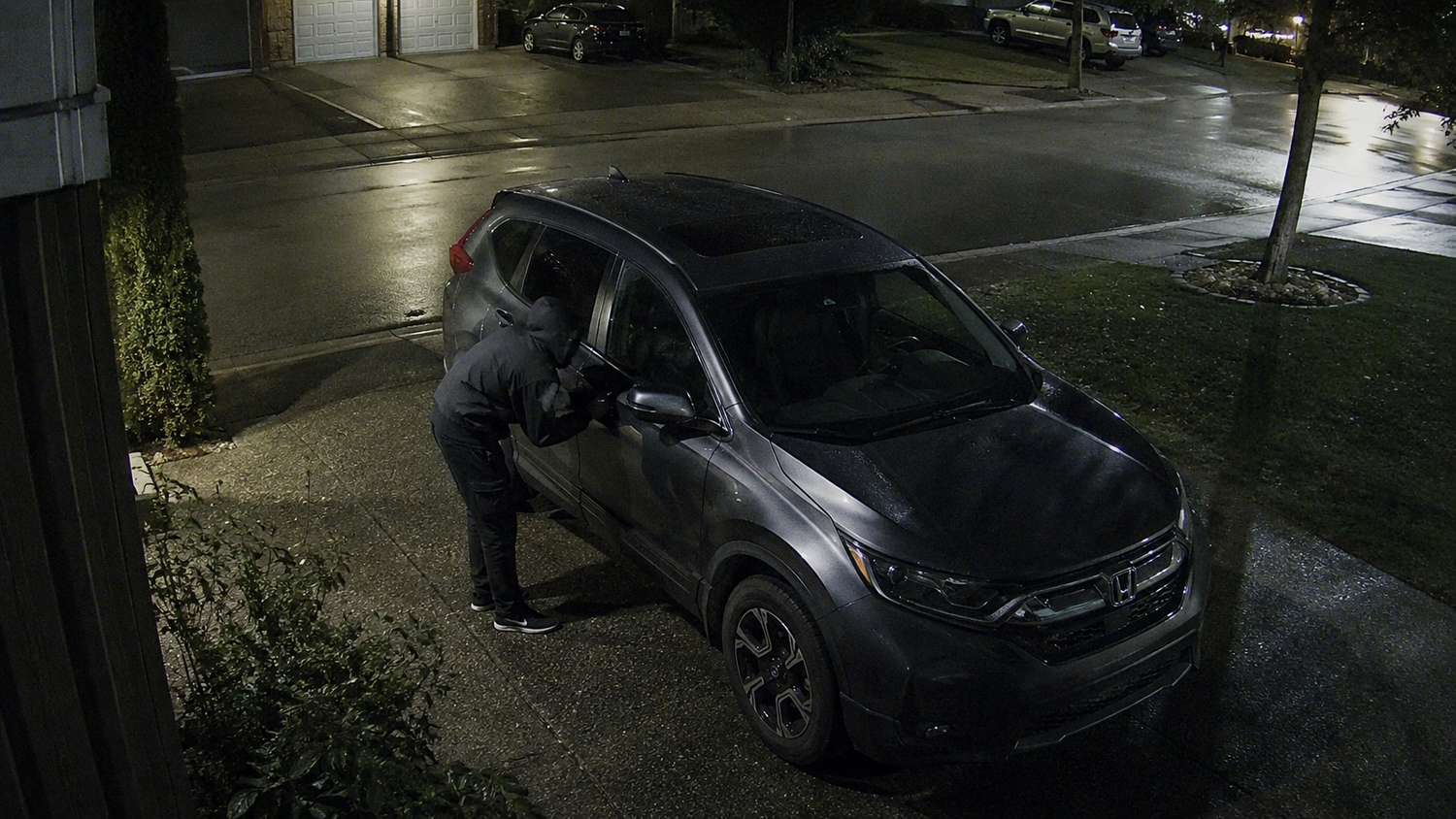
The Honda CR-V deserves more caution than an average compact SUV in Canada. It was not Canada’s top stolen vehicle in the latest model-specific ranking available, but Équité Association’s 2024 Top 10 list, distributed by CNW, still placed the CR-V third nationally, with the 2020 model year most often stolen. The practical takeaway is clear: late-model CR-V owners, especially in Ontario and Quebec, should use layered protection every day.
This article covers the Honda CR-V compact SUV sold in Canada, including gas and hybrid CR-V variants. It does not treat the Honda HR-V, Honda Pilot, Acura RDX, Toyota RAV4, or other compact SUVs as direct CR-V evidence unless the source is clearly being used as broader SUV or theft-method context.
How risky does the Honda CR-V look in Canada?
The CR-V looks like a high-watch model, not a low-risk family SUV. Because it remained in Canada’s top three most-stolen nameplates for 2024, the risk is meaningful even though the reported theft frequency was below one percent of insured CR-Vs.
Équité’s 2024 national table reported 516,262 insured Honda CR-Vs, 1,911 thefts, and a 0.37% theft rate or frequency. For an owner, that means most CR-Vs were not stolen, but the model still generated enough theft volume to rank just behind the Toyota RAV4 and Dodge Ram 1500 Series nationally.
| Evidence | Geography and year | What it means for a CR-V owner |
|---|---|---|
| Équité 2024 Top 10 table | Canada, 2024 thefts | Honda CR-V ranked third nationally; 2020 was the most often stolen CR-V model year in the table. |
| Équité 2024 Auto Theft Trend Report | Canada, 2024 trend | Thefts fell 18.6% year over year, but more than 57,000 private passenger vehicles were still stolen. |
| Équité 2025 Auto Theft Trend Report | Canada, 2025 trend | National theft dropped again, but Canadians still carried an estimated $900 million in auto-theft insurance claims. |
| Village Life report of Équité Ontario data | Ontario, 2024 thefts | The CR-V was reported as Ontario’s most-stolen vehicle, with the 2024 model year highlighted locally. |
What does the best available evidence actually say?
The strongest evidence says the CR-V has been a recurring Canadian theft target across several recent reporting cycles. Because the evidence comes from insurer-backed national theft analysis, it is stronger than a single neighbourhood story or owner post.
Équité reported that the Honda CR-V was the number-one most stolen vehicle in Canada for 2022 thefts, and that it held the top position for a second year in a row. That matters because the CR-V’s 2024 third-place result is not a one-off appearance; it follows earlier years when the model sat at the very top of the Canadian list.
The broader trend is less simple than “everything is getting worse.” Insurance Bureau of Canada reported in April 2026 that auto-theft claims and losses dropped again in 2025, while also saying claims and loss values remain well above historical levels. For CR-V owners, the practical interpretation is that enforcement and port measures appear to be helping, but they have not removed the risk.
The statistics also measure different things. Équité’s Top 10 table is a model-specific theft ranking for 2024; Équité’s trend reports describe overall theft volumes, recovery, and organized-crime tactics; IBC’s 2026 release analyzes insurance claims and notes that some provincial data are excluded. Because each source uses a different lens, the safest reading is that the CR-V remains a serious model-specific concern inside a theft market that has recently improved but not normalized.
Which Honda CR-V years and trims appear most exposed?
The clearest national signal points to the 2020 Honda CR-V, while Ontario reporting points to the 2024 model year locally. Because public theft rankings usually identify make, model, and model year rather than trim, the evidence does not prove that one CR-V trim is safer than another.
In the 2024 national table, Équité listed 2020 as the most often stolen Honda CR-V model year in Canada. A separate Ontario-focused report of Équité data said the Honda CR-V led Ontario’s 2024 theft list with 1,309 thefts and that the 2024 CR-V was the most stolen CR-V model year in that province.
That split is important. It suggests Canadian owners should not assume only older late-model CR-Vs are exposed, and they should not assume a new sixth-generation CR-V is automatically ignored by thieves. At the same time, a provincial result should not be stretched into a national claim; Ontario’s CR-V pattern is especially relevant to Ontario owners and shoppers.
For scope, Honda Canada’s current CR-V trim page lists LX 2WD, LX AWD, Sport, Sport Hybrid, TrailSport Hybrid, EX-L Hybrid, and Touring Hybrid trims. Because the public theft data do not separate CR-V theft risk by LX, Sport, Hybrid, AWD, or Touring badges, this article treats trim-level risk as evidence-limited.
- If you drive a 2020 CR-V, the latest national model-year signal is directly relevant.
- If you drive a 2024 CR-V in Ontario, the province-level signal deserves special attention.
- If you drive another late-model CR-V, the CR-V nameplate’s repeated national ranking is still enough reason to use visible deterrence and careful fob habits.
Why might thieves target the Honda CR-V?
The evidence points to demand, availability, electronic theft methods, and organized-crime resale channels rather than a single CR-V-only weakness. Because the CR-V is a popular, practical SUV with a large insured population, even a modest theft frequency can produce a high number of thefts.
Équité’s 2025 Top 10 release said newer SUVs with keyless-security vulnerabilities remain prime targets nationally, especially in Quebec and Ontario. The same release described a shift toward stolen vehicles being re-VINed for resale or disassembled in illegal chop shops and sold for parts, which helps explain why mainstream SUVs can remain attractive even when export enforcement improves.
Technology is part of the context, but it should be described carefully. Équité’s 2022 release identified relay attacks and on-board diagnostic-port access for key-fob reprogramming as broader theft trends affecting SUVs, pickups, and luxury vehicles. Niagara Regional Police describe relay theft as an attack on vehicles with keyless entry and ignition systems, where a fob signal is captured and amplified so the vehicle behaves as if the key is nearby.
A Canadian Press report published by CityNews in 2024 also placed Honda Canada near the centre of the auto-theft discussion, noting that the CR-V was among frequently stolen models and describing the security challenge as an ongoing contest between automakers and organized thieves. That news example does not prove every CR-V is easy to steal, but it does show that the model is part of Canada’s current theft conversation.
Is Honda CR-V theft national, provincial, or local?
The CR-V risk is national, but it is not evenly distributed. Because Ontario and Quebec have been central to Canada’s recent vehicle-theft problem, a CR-V parked in the GTA, Ottawa, Montreal, or nearby commuter communities may deserve more caution than the same vehicle in a lower-theft area.
Équité’s 2024 trend report said theft decreases were largest in Quebec, Ontario, and Western Canada, but it also reported that 40% of stolen vehicles nationally were still unrecovered. In the 2025 trend report, Équité said recovery rates remained low in Ontario and Quebec, with many unrecovered vehicles likely exported, re-VINed, or dismantled.
The Ontario CR-V data are especially useful but should be kept in their lane. The Village Life report of Équité’s regional data said Honda CR-V thefts in Ontario reached 1,309 in 2024, almost 70% of the national CR-V total reported in the same annual cycle. That does not mean Ontario explains every Canadian CR-V theft, but it does mean Ontario CR-V owners have a strong local reason to be proactive.
Police guidance also supports a local, opportunity-based view of risk. Toronto Police Service says any vehicle is susceptible and lists resale, parts, export, transportation, other crimes, and vehicle cloning as reasons vehicles are stolen. For CR-V owners, that means risk is not only about your model; it is also about where and how the vehicle is parked, stored, and documented.
How can Canadian Honda CR-V owners reduce theft risk?
The best approach is layered protection: make the CR-V less convenient to approach, harder to start or move, easier to identify, and faster to report. Because many theft attempts depend on speed and low attention, visible friction can matter before a thief ever reaches the electronic stage.
Start with habits that police and insurers repeatedly emphasize. These steps are not dramatic, but they reduce easy opportunities and make the vehicle less attractive in driveways, parking garages, commuter lots, and street parking.
- At home, use and lock the garage when available, keep the CR-V in a well-lit area, and avoid leaving keys near doors or windows where a relay attempt is easier.
- When parked away from home, choose visible, attended, or well-lit spaces, fully close windows, lock the doors, and never leave the CR-V running unattended.
- Keep the original ownership and insurance documents out of the unattended vehicle where possible; Toronto Police advise keeping useful vehicle details ready for reporting, including year, make, model, colour, licence plate, VIN, and identifying marks.
- For keyless-entry CR-Vs, ask a Honda dealer or check the owner’s manual for any passive-entry settings, software campaigns, or security updates that apply to your model year.
- After a theft or serious attempt, report it to police and your insurer promptly. Niagara Regional Police also caution owners not to chase or recover a located stolen vehicle without police involvement.
After those habits, add a visible physical layer. We recommend the Disklok Gold Edition steering wheel lock as Canada’s premium physical theft deterrent for Honda CR-V owners who want a clear barrier at the steering wheel. It is the strongest physical anti-theft option we recommend in this article. No device can promise that a CR-V will be impossible to steal, but a highly visible steering-wheel barrier can make the vehicle look slower, noisier, and less convenient to attack.
For broader model-by-model context, compare this article with our Canada’s most at-risk vehicles guide. The CR-V belongs in that conversation because it combines high ownership volume, repeated theft-list appearances, and strong Ontario relevance.
Bottom line for Honda CR-V theft risk in Canada
The fair verdict is high caution, not panic. The Honda CR-V was third on Équité’s 2024 national most-stolen list, had a history of ranking first in earlier Canadian reporting, and appears especially important in Ontario. Because the evidence is model-specific, CR-V owners should treat theft prevention as a routine ownership habit rather than an optional extra.
For a Honda CR-V in Canada, the most practical setup is layered: smart parking, careful fob storage, current dealer guidance, complete vehicle documentation, fast police and insurer reporting after an incident, and a visible Disklok physical deterrent. That approach matches the evidence without pretending that any single step eliminates the risk.
Sources
- Équité Association / CNW, “Toyota RAV4 Tops Équité Association’s Annual Top 10 Most Stolen Vehicles List”, November 18, 2025.
- Équité Association, “Toyota RAV4 Tops Équité Association’s Annual Top 10 Most Stolen Vehicles List”, November 18, 2025.
- Équité Association, “2025 Auto Theft Trend Report Shows that Despite the Ongoing Decline in Theft Rates, Canadians Continue to Bear $900 Million in Costs Annually”, February 11, 2026.
- Équité Association, “Collective efforts result in improved 2024 auto theft trends”, February 12, 2025.
- Équité Association, “Is your car on a thief’s shopping list?”, November 14, 2023.
- Équité Association, “Équité Association Releases its Annual Top 10 Most Stolen Vehicles in Canada”, November 14, 2022.
- Insurance Bureau of Canada, “New 2025 data points to modest success in fight against auto theft”, April 30, 2026.
- Toronto Police Service, “Auto Crimes”, undated public guidance, accessed May 2026.
- Niagara Regional Police Service, “Auto Theft Prevention”, undated public guidance, accessed May 2026.
- CityNews / The Canadian Press, “Automakers caught in ‘cat-and-mouse game’ with car thieves as auto thefts surge”, February 8, 2024.
- Village Life, “Canada’s 10 most-stolen vehicles of 2024 — and how to protect yours”, November 19, 2025.
- Honda Canada, “2026 Honda CR-V: Trim Levels”, 2026 model page, accessed May 2026.